Which party won highest subnational office? The Subnational Elections Database offers this information for 84 of 106 democracies holding subnational elections between 1990 and 2024. For Latin America, it also captures vote shares, candidate information, and characteristics of the subnational electoral framework.
Country-Level Data
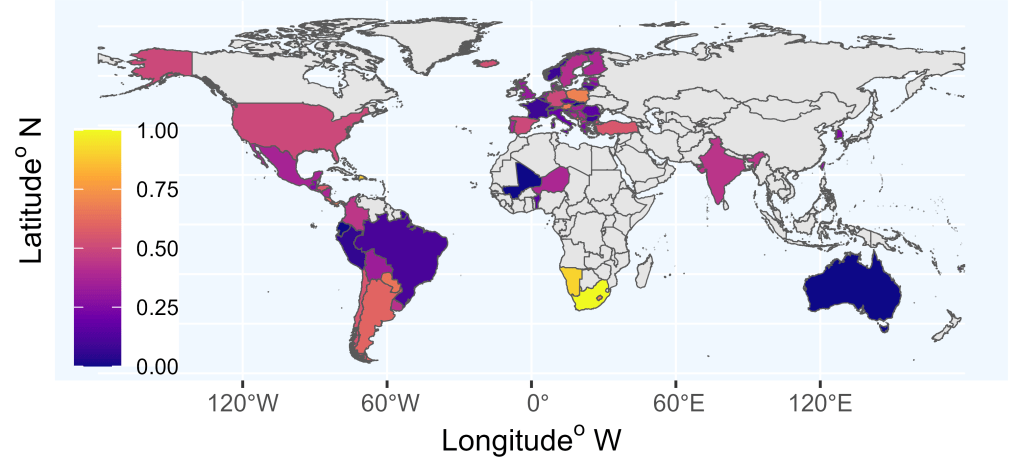
To what extent did the regime leader’s party also win control over highest subnational (executive) office?
(Note: Data shown refers to the last subnational elections as of Dec. 2005. Leader’s party is evaluated on January 1st the year after the subnational election.)
Subnational Control of Regime Leader’s Party in 2005 Under Democracy
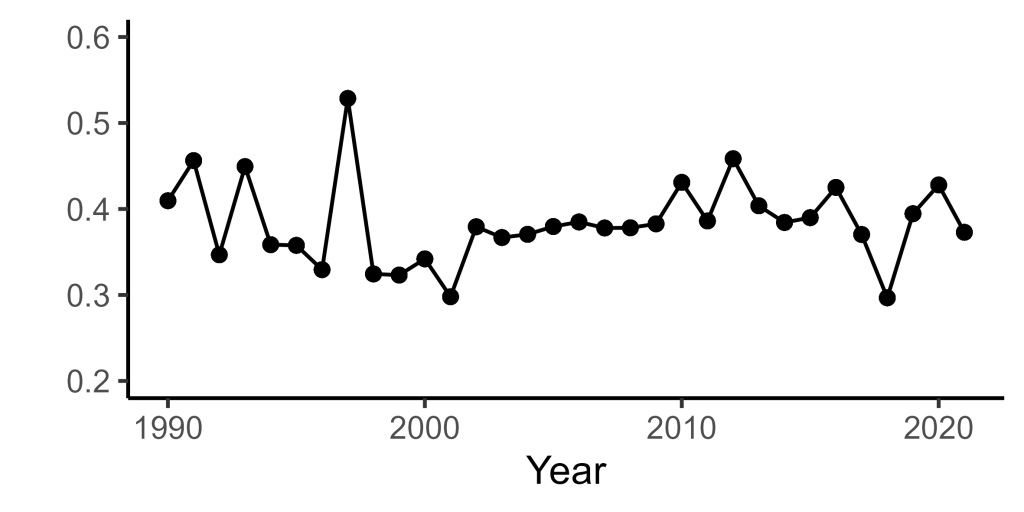
How has the average share of subnational victories by the regime leader changed over time? (84 democracies, 1990-2021)
Average Subnational Victories of Regime Leader’s Party Under Democracy
State-Level Data
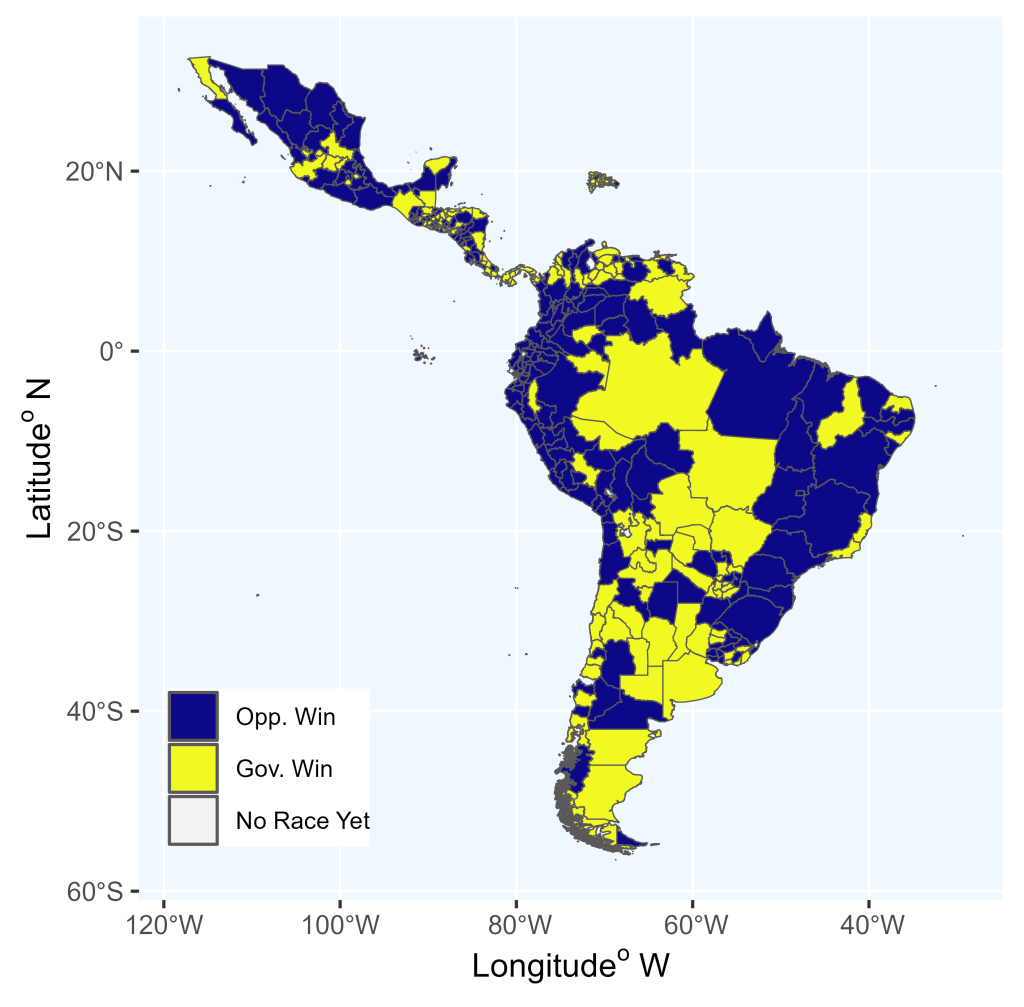
Has a party in national government won the last race for highest subnational executive office? (371 states across 18 democracies in Latin America; opposition status evaluated the day of the subnational election)
Last Subnational Election Outcome By State in Latin America (December 2005)
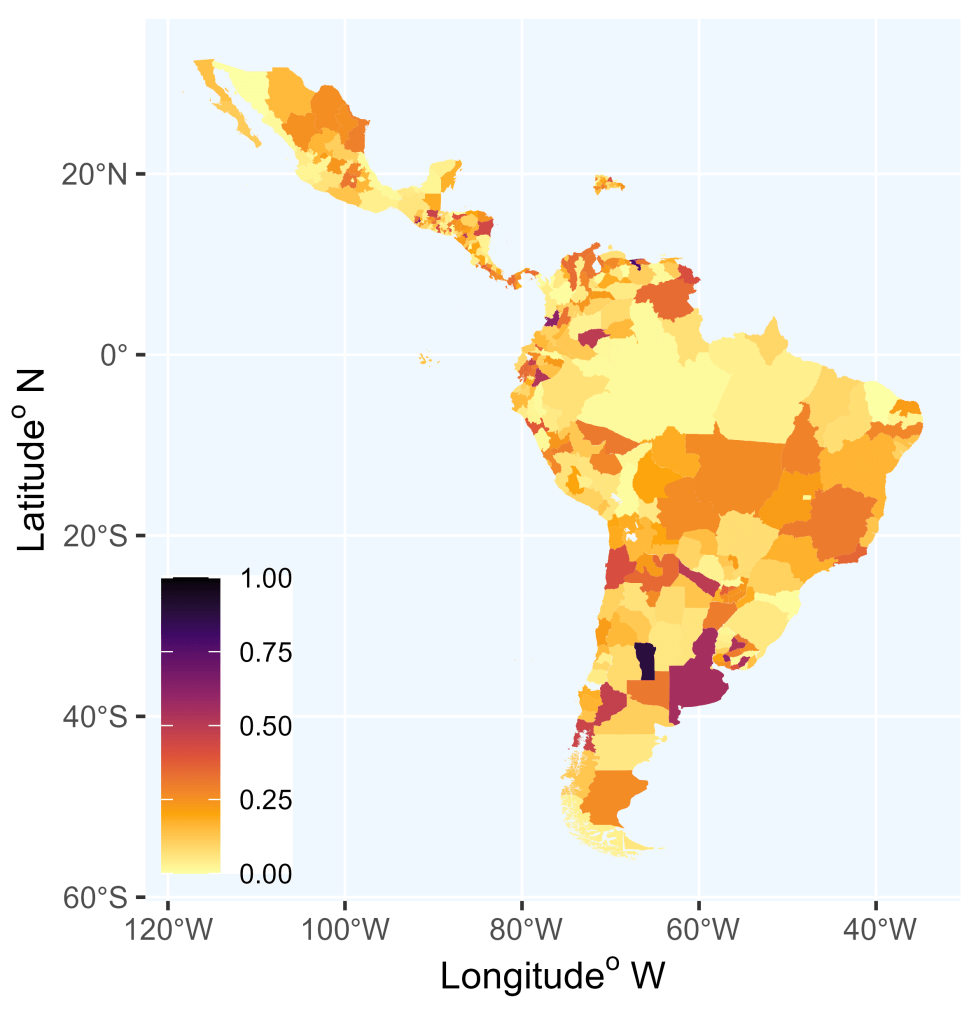
This shows the two-party vote share difference in the last subnational elections: The darker the color, the more were votes given to the top two parties concentrated in the winning party. The figure highlights spatial variation in subnational electoral competitiveness.
Subnational Electoral Competitiveness in Latin America (December 2005)
Current Projects Based on the Subnational Elections Database
- The Subnational Roots of Democratic Stability (book project)
- Introducing the Subnational Elections Database (paper presented at APSA 2025)
- The Subnational Roots of Legislative Party Switching?
- The Effect of Institutional Access on Extra-Institutional Opposition Strategies in Latin America
- Extending the Subnational Elections Database (pending grant application; would enable a significant extension of the disaggregated data beyond Latin America)
Adjacent Datasets in Comparative Politics
- Constituency Level Elections Archive: Offers spatially disaggregated data on national-level legislative elections.
- Arjan Schakel’s data on subnational legislative elections (primarily in Europe).
- Regional Authority Index: Data on the authority held by regional governments in 96 democracies (1950-2018).
- Subnational Politics Project: Data on subnational elections and incumbents in Argentina, Brazil and Mexico.
 Julian Michel